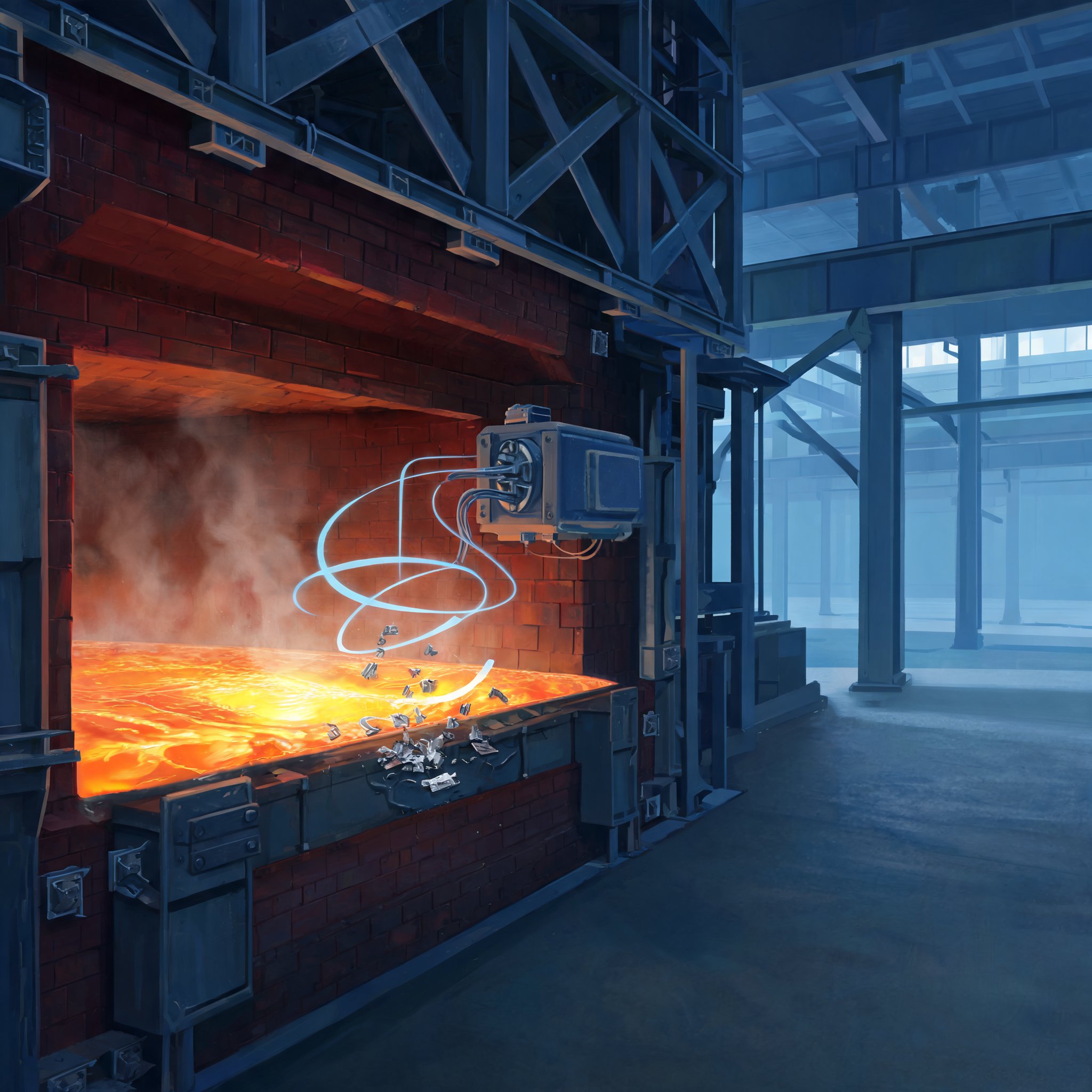
Aluminium casthouses are under pressure to raise their use of recycled metal without sacrificing melt quality, recovery rates or production efficiency. Lightweight scrap, machining chips and other low-density materials are difficult to charge into conventional melting furnaces, which makes efficient feeding and submergence central to recycling performance. Consistent temperature and chemical composition across the molten bath are equally critical, so circulation and stirring equipment must support heat transfer and metal movement while limiting process interruptions and metal loss. Conventional mechanical pumps rely on immersed rotating parts that can deteriorate through exposure to molten aluminium, dross accumulation and contact with refractory debris.
Zmag America, Ltd. works in that specialised corner of casthouse technology, developing magnetic engineering solutions for molten-metal circulation, furnace stirring and scrap recovery. The company's roots lie in magnetic engineering and the commercialisation of eddy-current separation for recovering non-ferrous metals from mixed material streams; it later expanded into molten-metal applications and developed its patented zPMC (Zmag Permanent Magnetic Circuit) as the foundation for equipment that stirs, circulates and submerges material in molten aluminium.
Permanent magnets in place of immersed impellers
The difference from conventional electromagnetic stirring lies in the field source: zPMC uses a permanent magnetic circuit rather than an electromagnetic arrangement to move the metal. Zmag describes the resulting flow as a virtual impeller, producing circulation without immersed mechanical impellers. In an August 2025 interview, Eishin Takahashi, president of Zmag America, identified limited familiarity with the technology as one barrier to wider adoption in the United States, observing that aluminium producers globally tend to be conservative and more comfortable with equipment and processes they already know.
MagStir, MagPump and Typhoon
- MagStir is a non-contact stirring system for melting and holding furnaces that supports homogenisation of bath temperature and alloy composition. Zmag offers configurations for furnaces with capacities from 15 to 200 metric tons. New Zealand Aluminium Smelters installed the technology in a casting furnace and later extended it to other furnaces; a 2017 case study reported improvements in temperature control during furnace preparation. A unit was also fitted at Rio Tinto-operated Boyne Smelters in Queensland, Australia, in 2019.
- MagPump covers pumping and circulation and fits a standard pump well without furnace modification. It has no physical impeller and is marketed as a nearly hands-free option with no consumable parts and minimal downtime. At the TANDEM Division of US secondary producer TST Inc. in Fontana, California, a seven-week trial replaced an existing mechanical pump; the company reported smooth operation, reduced disturbance of the metal surface and no splashing as the furnace level fell during draining. Its use in side-well, multi-chamber furnaces was presented at TMS 2023, alongside potential roles in gas injection and scrap submergence.
- Typhoon addresses scrap submergence and chip melting, generating a vortex-like magnetic movement that draws light scrap beneath the molten surface. At Neuman Aluminium's Marktl facility in Austria, the system formed part of a furnace modernisation aimed at low-density post-consumer scrap, including fractions with a bulk density of about 375 kg/m³. Against a target of one metric ton per hour while the furnace continued melting solid charge, Zmag reports that the unit processed almost twice the planned scrap quantity within the expected time, with low operator involvement and no reported impact on melt or finished-product quality. Published figures give 5–15 kW including the air-cooling blower, up to five metric tons per hour of machining chips and adjustable vortex intensity.
A crowded equipment field
Several established suppliers compete in furnace stirring, metal circulation and scrap submergence, although their products are not all direct equivalents. ABB's AL-EMS electromagnetic stirring system serves melting, holding and alloying furnaces, with more than 430 installations reported; in April 2026 the company announced a fifth stirrer order from Arconic for a Hungarian casthouse. Presezzi Extrusion Group's Melting Technology division offers the L.E.C. low-energy stirrer along with remelting and casthouse equipment. Pyrotek supplies electromagnetic pump systems and its LOTUSS low-turbulence scrap submergence technology, which relies on a circulation pump and refractory well. Rockwell Automation sits in adjacent industrial automation, providing furnace and ladle-shop control systems rather than a like-for-like permanent-magnet stirrer.
As producers take on more challenging recycled feedstock, managing molten-metal movement without conventional immersed mechanical components may become an increasingly relevant consideration for casthouses.