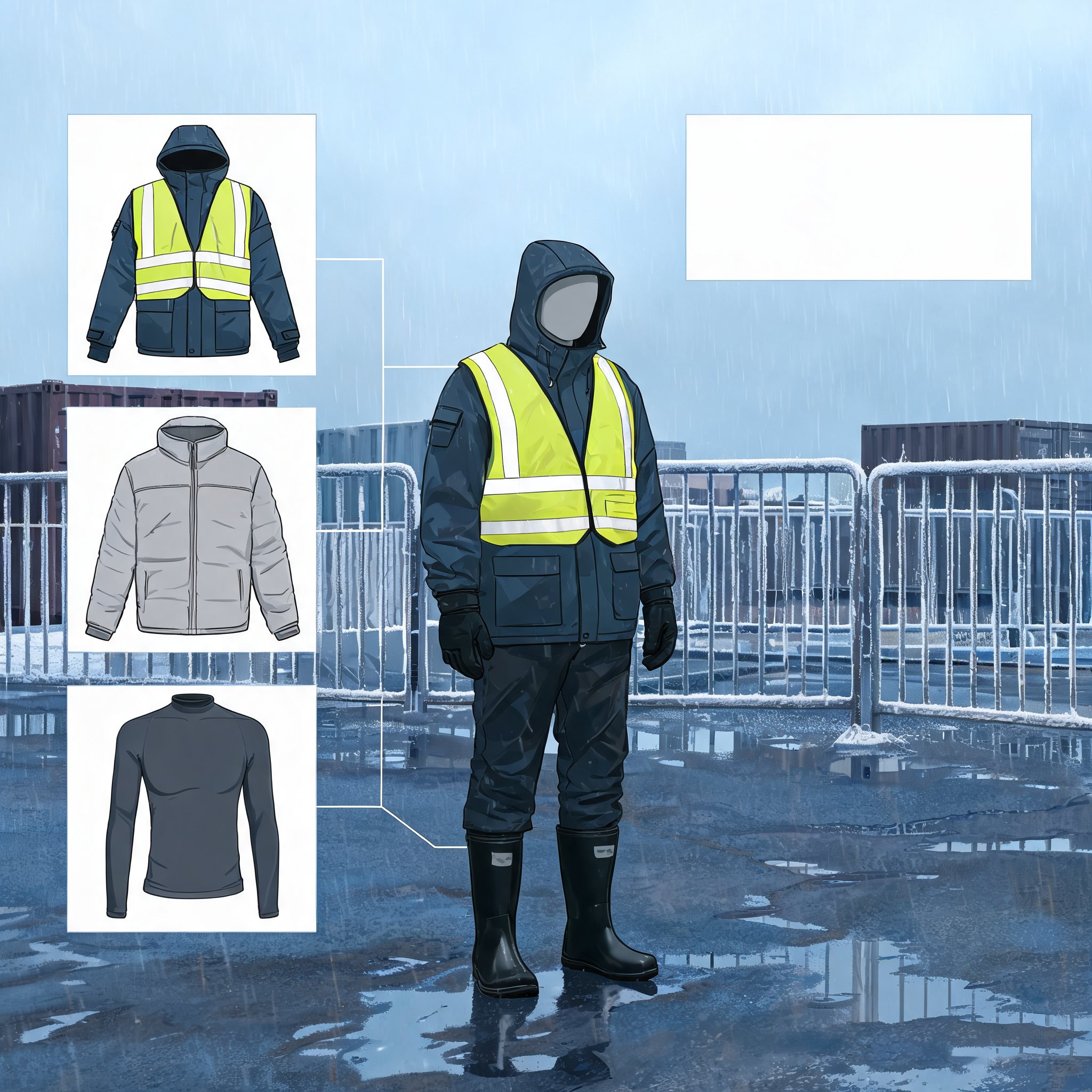
Outdoor work in winter raises risks for employees when personal protective equipment (PPE) is incorrectly selected or combined, according to CWS Workwear. The company has highlighted five typical protection gaps in a current guide.
Shorter days, wet conditions and frost change the hazard situation at many outdoor workplaces, CWS Workwear notes. Yet PPE is often not adapted to those conditions. The issue is not necessarily a lack of certified products, but how individual garments perform as a layered system.
According to the guide from CWS Workwear International GmbH, based in Dreieich, protection gaps arise particularly in the interaction between clothing layers. Individual items may be certified, but the combination actually worn may fail to meet the requirements of the relevant standards.
The guide’s five typical gaps therefore point to a practical checking task: employers and wearers need to consider the complete PPE assembly rather than assessing each item in isolation. Selection and combination are presented as central to winter protection.
For outdoor work, the guidance identifies changed conditions such as short daylight hours, moisture and freezing temperatures as reasons to review existing PPE arrangements. A combination that was suitable under other conditions may no longer match the hazards of winter work.
The stated risk is specific: certified components do not automatically make a certified combination. CWS Workwear’s guide places responsibility on the choice and layering of gear.