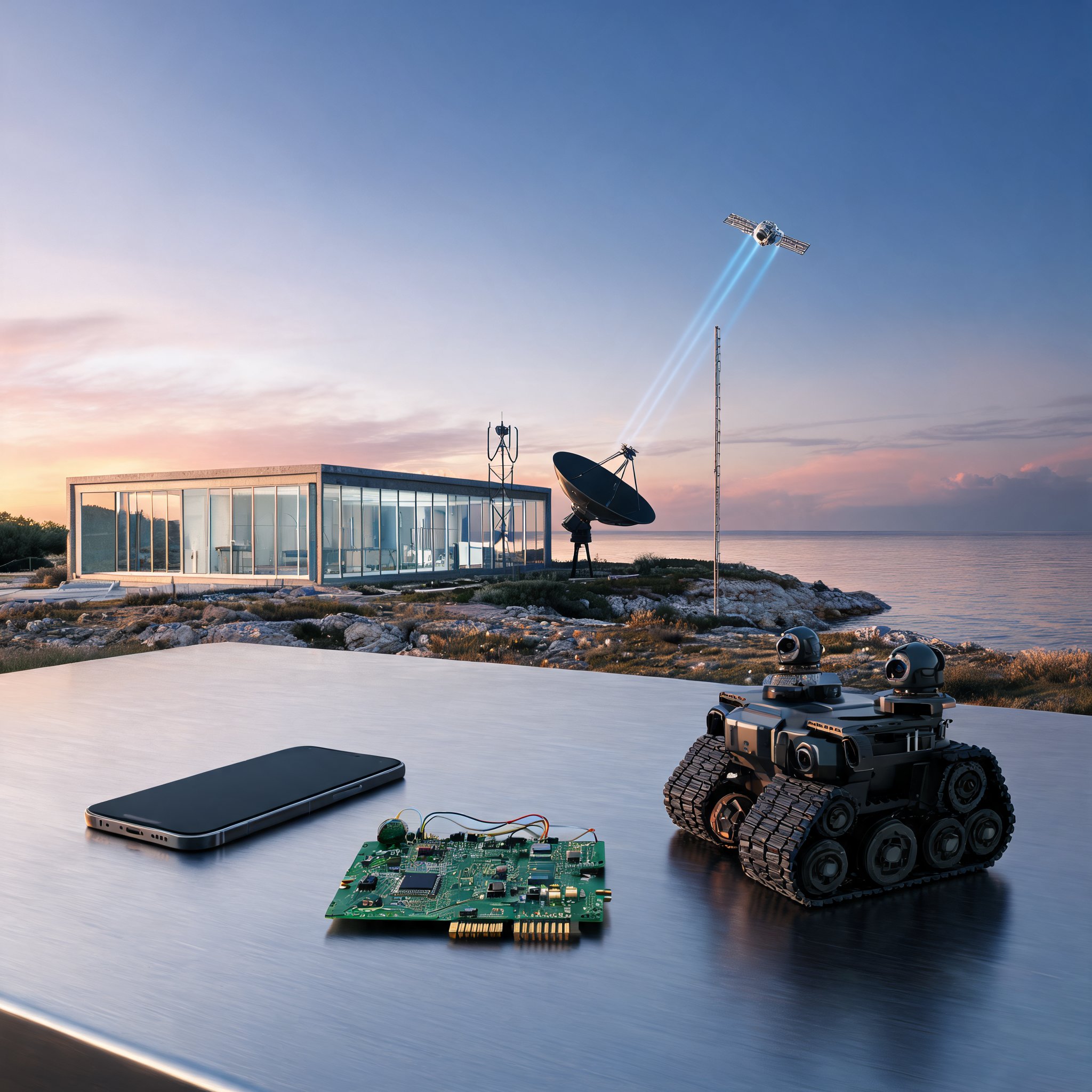
Vodafone and AST SpaceMobile have activated an “Earth-space station” in Málaga, a facility intended to support research and development of integrated terrestrial and low Earth orbit networks. Field testing is already under way in nearby Granada, according to the partners.
The companies describe the site as Europe’s first station dedicated to R&D for combined ground-based and LEO systems. Its primary role is to validate direct-to-device smartphone broadband and applications in areas with little or no mobile coverage.
University partnerships and test setup
The station is part of the Málaga Satellite Centre, which was established with the University of Málaga and its Mobile & Aerospace Networks Lab. An initial grant from the Spanish Space Agency supports the centre. Vodafone said it has begun activations through an automated system installed with the University of Granada. This system remotely captures video, data and call logs exchanged among AST SpaceMobile satellites, the Málaga gateway and the terrestrial network.
The Málaga gateway links AST SpaceMobile’s LEO constellation to the terrestrial network through a 0.9-metre dish. The partners are bringing network services and endpoint hardware into a single validation programme for satellite direct-to-device connectivity. Testing will extend to device chipsets and software, with Vodafone aiming to improve performance and battery life by evaluating devices across both network types.
Robots, handover and emergency use
The centre will also support field operations using autonomous robots to inspect remote or hazardous sites. Vodafone identified traffic orchestration as a central research task. The goal is to maintain connections for smartphone users and emergency responders as they move between terrestrial and satellite coverage.
Planned emergency communications tests will examine interoperability between terrestrial and non-terrestrial networks for responders working in remote areas. One proposed disaster simulation would shut down ground-based networks and test whether a mobile antenna automatically reselects a satellite channel to maintain service.
Spain’s Ministry of Digital Transformation and of Public Service has authorised Vodafone to operate in the 700MHz band to support the facility’s development.
Industry context and collaboration
Marco Zangani, Director of Network Strategy and Architecture at Vodafone, said that mobile networks underpin personal communication, safety and productivity for EU citizens and businesses, making coverage resilience and ubiquity matters of economic and social importance. He said the new facility would allow EU member states to collaborate on communication systems that connect people and devices everywhere and at all times.
The Málaga laboratory opened in October last year and supports Satellite Connect Europe, the wholesale joint venture between Vodafone and AST SpaceMobile. The partners position the station as a research hub for testing how terrestrial and satellite networks can operate together, including the handover of traffic and the validation of devices and applications.