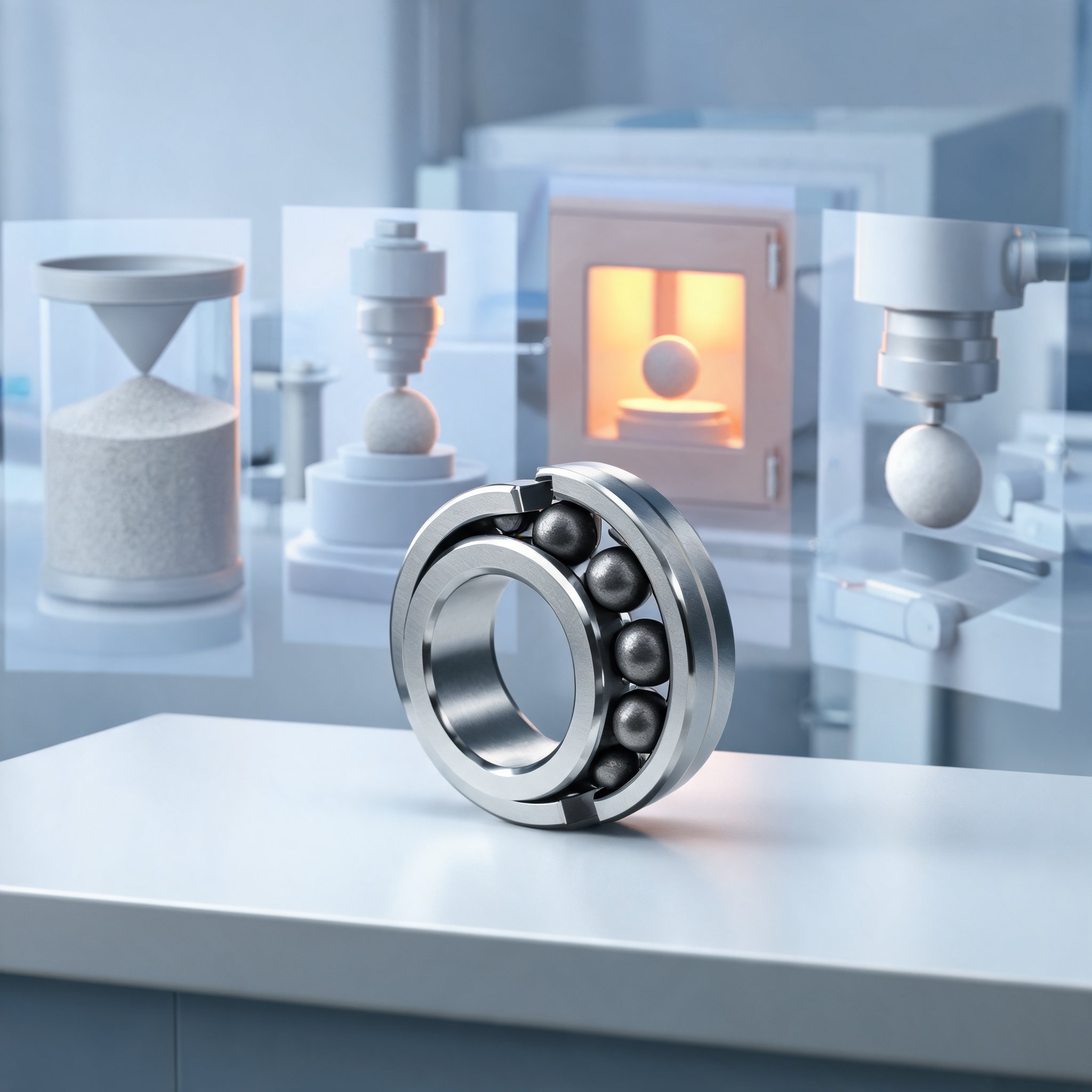
SKF has opened a Ceramic Process Laboratory (C-Pro Lab) at its research and development center in Houten, the Netherlands, adding a facility the company says will span the full ceramic manufacturing chain, from raw material powder processing to high-performance component engineering.
SKF said the lab reinforces its technology leadership across the ceramic value chain and is intended to encourage wider adoption of advanced hybrid bearing technology. The company ties the investment to a market shift: as industries move toward electrification and higher energy efficiency, it says demand for hybrid ceramic bearings is accelerating.
Hybrid bearings combine high-grade steel rings with silicon nitride rolling elements. According to SKF, they provide better electrical insulation, lower weight and reduced friction than conventional all-steel designs. Those characteristics matter most, the company says, where electric motors run at high speed and steel bearings would otherwise face electrical erosion.
Annika Ölme, SKF's chief technology officer and senior vice president for technology development, described ceramic and hybrid bearing technologies as essential enablers of clean, reliable rotation in next-generation industrial electrical applications. She said the C-Pro Lab gives the company full command of the end-to-end ceramic process, which SKF expects to translate into faster innovation, better material performance and quicker commercialization of hybrid solutions for customers worldwide.
The laboratory is positioned as a global competence center within SKF's research and technology development organization. Placing powder formulation, compaction, sintering and surface finishing under one roof is meant to let researchers prototype new material compositions rapidly, refine microstructures and improve process efficiency for high-volume manufacturing.
For SKF, the facility serves as both a research asset and a commercialization tool. Because it concentrates every stage of the ceramic process, the company expects new formulations and microstructural improvements to move toward volume production more quickly, a pace it considers important as customers in drives, rail and aerospace look for bearings suited to electrified, high-speed and high-temperature duty.
SKF sees hybrid ceramic bearings addressing operational problems in several expanding sectors, including industrial automation, aerospace and high-speed machinery. In high-speed electric motors, the company says ceramic technology helps prevent electrical erosion; it also cites friction reductions of up to 50 percent and reliability at extreme temperatures in demanding environments.
The official opening brought together customers from the railway, aerospace and drives industries, along with other stakeholders and H.E. Julius Liljeström, Swedish ambassador to the Netherlands. SKF presented the gathering as a reflection of the customer collaboration behind industrial innovation and sustainable technology.
The announcement set out the lab's intended capabilities; commercial timelines and production volumes were not disclosed.