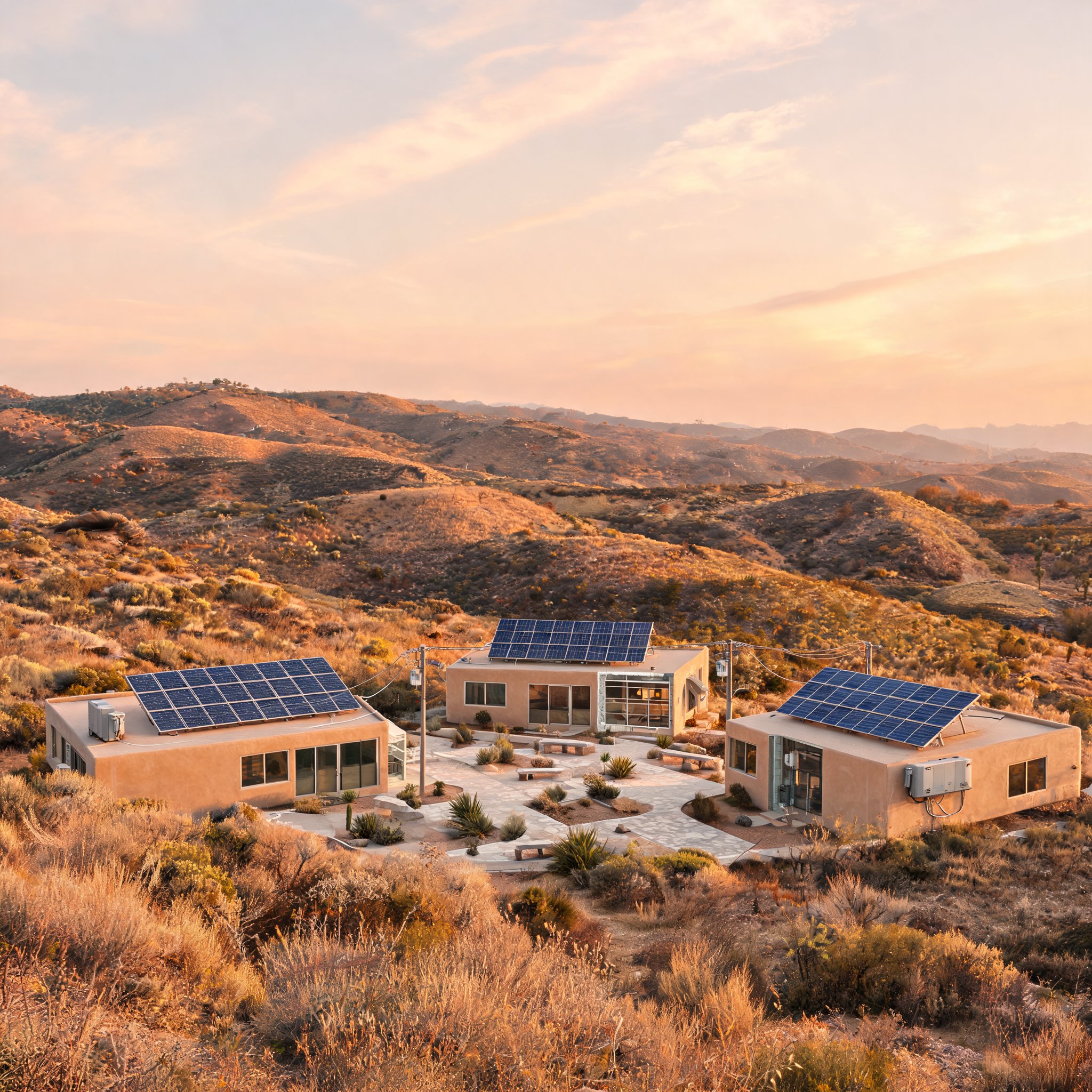
The Mesa Grande Band of Diegueño Mission Indians has completed solar and battery storage installations at three Tribal facilities on its reservation in San Diego County, California, in partnership with the nonprofit Solar Electric Light Fund (SELF). The Tribe described the project as the first public clean energy installation on the reservation and part of a longer effort to strengthen energy sovereignty.
The systems serve the Tekamuk, Hallyeyaaw and Golden Eagle administration buildings. Those buildings function as civic and community hubs, supporting Tribal government, housing services, cultural and educational activities, food distribution and emergency response.
Generation and backup power
The solar arrays are designed to meet the three facilities’ current electricity needs and include additional capacity for future growth. Together, they are expected to generate approximately 60 MWh of solar electricity annually and to reduce the Tribe’s electricity costs by at least $16,780 per year.
Battery storage allows the administration buildings to keep operating independently of the electric grid during outages, which the Tribe said are common in the rural community. Curtis La Chusa, chairman of the Mesa Grande Tribal Council, said electricity is often taken for granted until service is interrupted. He said outages at Mesa Grande can last for days and disrupt the services the Tribe provides.
Long-running energy work
The installation builds on more than two decades of Tribal efforts to expand access to reliable, affordable clean energy. Grid electricity did not reach the reservation until the 1950s, and some homes remain off the grid today, using small generators for basic household needs. The Tribe has previously pursued residential solar, renewable energy planning and workforce development.
Four Tribal members who had received solar installation training worked on the project. SELF facilitated the project. Bob Freling, the organization’s executive director, said reliable and affordable energy gives communities room to invest in future needs. He said lower energy costs and stronger resilience can free up resources while providing a foundation for growth.
Housing and community plans
The clean energy work comes as the Tribe begins planning new housing and community infrastructure. The long-term plan includes 1,500 new homes and is intended to address housing affordability and supply shortages that have historically limited how many members can live on Tribal land. It will include the first new housing built on the reservation since 2005.
La Chusa said the Tribe has a bright future and that it starts with letting Tribal members come home and providing spaces and services that help them thrive. The project was funded by the William, Jeff and Jennifer Gross Family Foundation and others.