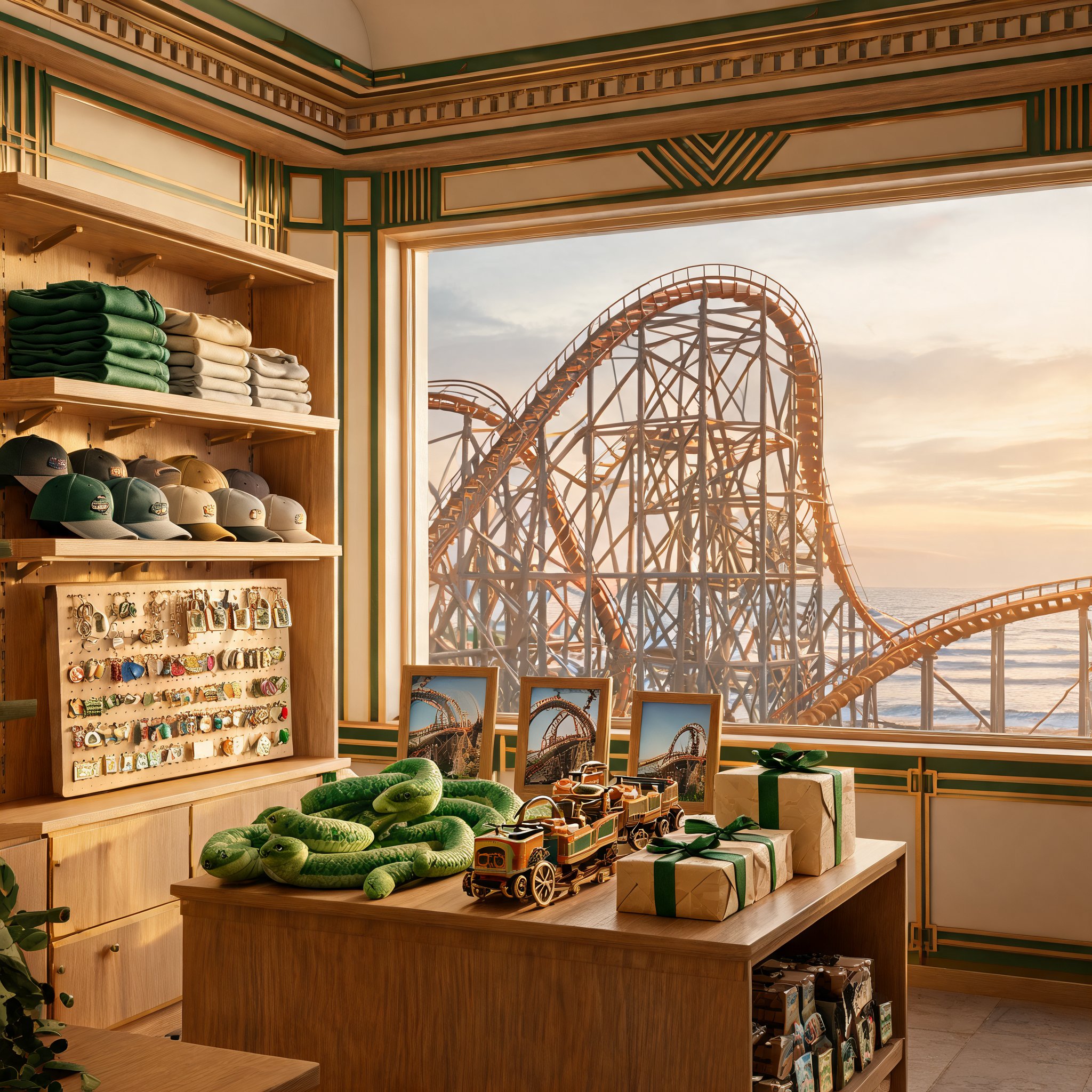
At 130 years old, Pleasure Beach in Blackpool is known for its seaside amusement park atmosphere, classic wooden roller coasters, the Big One and its shows. Its retail operation is less discussed, but Damian Jackson, the resort’s head of retail, presents it as a deliberately curated part of the visit rather than a souvenir shop at the exit. Its flagship shop sits at the main entrance in the Casino building, supported by outlets across the site. Jackson oversees physical stores, e-commerce, ride photography and merchandise development, and works with Amanda Thompson from the initial idea through design briefs, product development, sampling and final approval. His stated principle is that the resort does not simply put a logo on a product: every range must have a reason for existing, a clear customer and an authentic connection to Pleasure Beach.
Retail built around the attraction, not added afterward
The clearest example is Aviktas, a new attraction whose merchandise was developed alongside its identity. Instead of treating the range as a set of products carrying a ride logo, Jackson said the team built it around the attraction’s complete visual world: its golden snake, emerald colouring, mythology and sense of mystery. That approach reflects a broader argument in the interview: merchandise is strongest when retail is part of the original creative conversation, rather than being added after an attraction is complete.
The commercial test is whether a product works beyond the park boundary. Jackson’s team asks whether someone would wear an item away from the resort, whether an enthusiast would be proud to display it, whether a child would be excited to receive it and whether it would genuinely remind a family of their visit. Those questions are intended to give each product a purpose and an audience, rather than relying on branding alone.
A segmented portfolio for a mixed audience
Pleasure Beach serves families on a first visit, school groups with limited spending money, teenage friends and couples, international tourists, lifelong fans and serious roller coaster enthusiasts, often on the same day. Their reasons for buying differ. A family may want a traditional souvenir of the day; a ride enthusiast may want an accurate collectable tied to a particular attraction; teenagers may respond to confectionery, accessories and trend-led apparel; heritage-minded visitors may value nostalgia, craftsmanship and the stories behind the resort.
To address that spread, the resort builds its range around customer missions, price points and levels of engagement. The portfolio includes impulse purchases such as confectionery, magnets, keyrings and badges; practical products such as bottles, bags and ponchos; fashion-led apparel and accessories; children’s products and plush; and premium or limited-edition pieces for enthusiasts and collectors. It also balances attraction-specific merchandise with broader Pleasure Beach branding, licensed ranges, playful products and heritage collections.
Jackson argued that having something for everyone does not mean filling shops with unlimited choice. It means offering a carefully edited range in which every product has a purpose, a target customer and an appropriate price. That distinction matters because a broad assortment can dilute the story and complicate stock management, while an edited range can make decisions easier for visitors and for staff.
Premium collectables and the authenticity test
The Aviktas range also produced a notable commercial signal. According to Jackson, a run of 50 models priced at £250 each completely sold out. He presented that as evidence that a market exists for premium, limited-edition collectables when a product has authenticity, detail and a strong connection to an attraction. The example does not prove that every premium item will sell, but it shows that at least one narrowly defined collector offer can find buyers.
Jackson described growing guest interest in products that feel exclusive, authentic and considered: attraction-specific merchandise, premium apparel, subtle branding, collectables, limited editions and items with a clear story. There is also demand for merchandise that can be used or worn beyond the visit, so a hoodie, cap, bottle or bag must work as an attractive product in its own right. At the same time, generic souvenirs and heavily branded products without an additional story have become less compelling. Traditional keyrings, magnets, mugs and confectionery remain important, but Jackson said their design, quality, presentation and relevance must continue to evolve.
Heritage, licensed characters and exclusivity
Pleasure Beach’s 130-year history gives it an archive of attraction imagery, typography, posters, architecture and stories. The resort can reinterpret those assets through contemporary apparel, homeware and collectables; the aim, Jackson said, is not to make everything feel old-fashioned but to use authentic history in a fresh and desirable way. Mr Funshine products are one example of nostalgia given a contemporary twist. Playful assets also matter. Humour, colour, character and unexpected ideas can engage children, families and casual visitors, and they help the retail identity go beyond a collection of ride logos.
Licensed attractions are another part of the mix. Pleasure Beach works with IP owners and approved suppliers on brands such as Nickelodeon and Aardman’s Wallace and Gromit, following brand guidelines and approval processes while considering how those characters and stories are experienced at the park. Jackson said the strongest partnerships are collaborative: the licensor protects the brand, while the resort explains what visitors respond to and how products need to work in an attraction environment. To compete with general online retailers, Pleasure Beach aims for relevance and exclusivity through exclusive designs, attraction references, location-specific details, personalisation and products that celebrate the visit itself.
Operational discipline and supplier partnerships
The interview also placed significant weight on retail basics. Jackson called stock accuracy and product availability the least glamorous and most critical parts of the operation. A strong product cannot generate revenue if it is in a stockroom, has not been reordered, is incorrectly priced or is unavailable where guests expect to find it. Accurate deliveries, stock movement, replenishment, pricing, signage and daily compliance checks are therefore part of protecting the guest experience: clear pricing builds trust, good housekeeping makes products more desirable and effective replenishment prevents missed purchases.
Suppliers are treated as creative and commercial partners rather than simply manufacturers. Jackson said the best suppliers understand the brand, bring ideas, respond constructively to feedback and can translate an initial concept into a commercially viable product. Reliability matters across quality, communication, lead times, compliance, pricing and consistency. Over time, he argued, strong relationships allow both sides to be more ambitious and efficient.
The shop as part of the day
Pleasure Beach wants retail to feel like another chapter of the day rather than an obligatory stop at the exit. That means considering retail during the planning of attractions, events and guest journeys. Themed environments, product demonstrations, characterful displays, confectionery experiences, personalisation, ride photography and interactive selling can make shopping entertaining. The Big Big Bubble Shop is cited as an example of retail being an active experience. Retail spaces are also meant to reflect the personality of their location, so a shop connected to a major thrill ride should feel different from a children’s character store, a heritage collection or a confectionery outlet.
Presentation, location, storytelling, pricing and team confidence all influence whether a visitor buys, Jackson said. The resort uses clear price architecture so guests can enter a range at different levels, and encourages trade-up through better materials, greater detail, exclusivity, personalisation or a bundle rather than a higher price alone. Product adjacencies matter: a plush character may lead to an outfit, a ride photograph to a frame or multi-photo offer, and attraction apparel to matching accessories and collectables.
Staff play a direct role. Jackson described retail colleagues as hosts, storytellers and brand ambassadors who provide energy, product knowledge and personality. They can demonstrate a product, explain the story behind a range, suggest an addition and recognise when a guest needs help. At Pleasure Beach, that can include making candy floss, helping a child build a teddy, demonstrating bubbles, presenting photographs or personalising a gift. Gift wrapping and personalised embroidery are offered for guests who want a purchase to feel more personal and significant, and to support gifting beyond the day of the visit.
E-commerce extends the relationship year-round. It lets enthusiasts follow new launches, previous visitors reconnect with memories and customers who cannot travel to Blackpool access selected products. Social media and email support new-product communication, seasonal campaigns and audience testing, while online purchasing behaviour can differ from in-park behaviour and provide insight into demand.
What the approach depends on
Taken together, Pleasure Beach’s retail strategy rests on product relevance, a segmented range, operational discipline and a narrative link between the shop and the park. The limits are equally clear. The resort’s claims are presented from the perspective of its head of retail, and the sold-out £250 model is a single example rather than a guarantee of premium demand. The model also depends on execution: stock accuracy, supplier reliability, pricing clarity and staff capability all shape whether a curated range reaches the guest. For other attraction operators, the lesson is less about copying specific products than about involving retail early, editing the range around identifiable customers and making the operational basics reliable enough to support the story.